Starting a Private Pilates Practice With No Equipment and No Lease
- 4 min
- read
- 6 steps
- in this guide
- Ruby
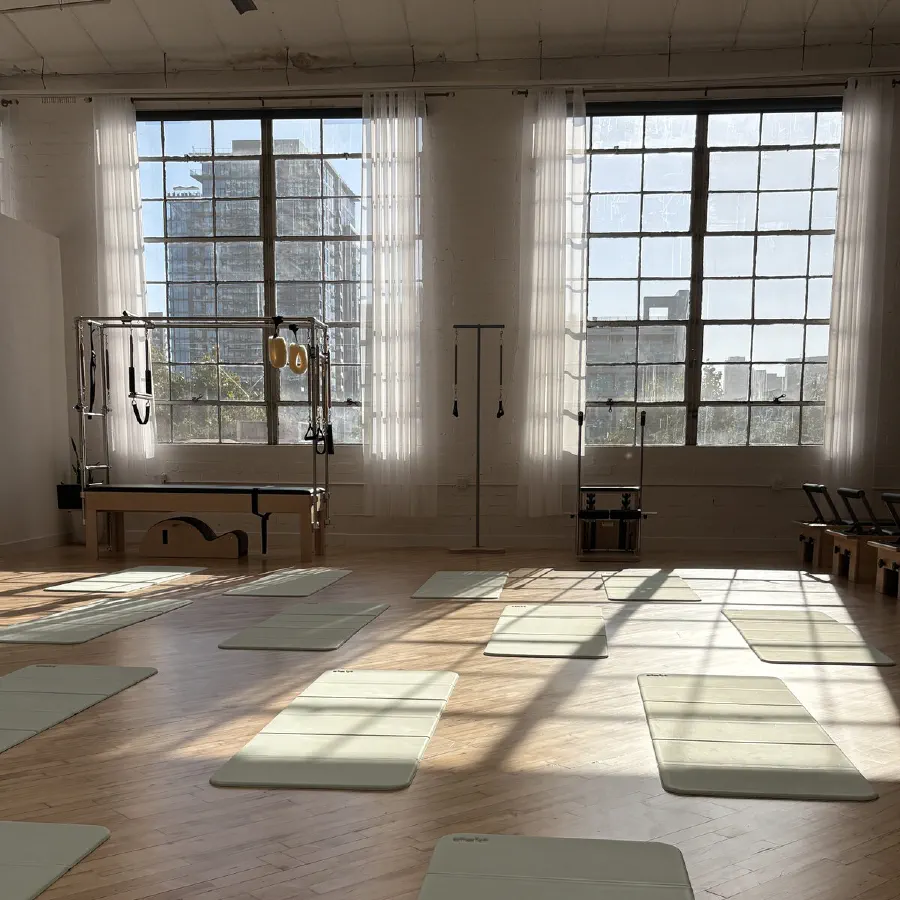
You can build a private client book before you own a single reformer or sign a single lease. Here’s how I’d think about getting started when capital is the thing you don’t have.
Your two options are not the only options
Most instructors I talk to assume they have to teach on someone else’s group schedule or take on a space of their own. One puts your hours on another studio’s timetable, and the other asks for money and a signature before your first client books.
There’s a third path: rent a private suite by the hour and bring only your clients. If you want the studio pitch, why Inspired Studios covers it. This post is for the practical question underneath it: what do you actually need to start?
Before you read on, name the one thing that’s stopping you. Keep it in mind for the next section.
Three problems that stop instructors going independent
In my experience these are the three that come up again and again:
- No capital for a full equipment set.
- No interest in lease negotiations.
- Group classes that block your private sessions.
I won’t put a dollar figure on equipment or a lease here, because the number that matters is yours. Get a real quote for the equipment and space you’d want, and keep that figure beside you for the rest of this post.
Once you have your numbers, you’ll want to know how many sessions a week it takes to cover a space.
Zero capital risk
At Inspired Studios, you get full apparatus without the equipment overhead. That means your first cost is the first hour you book, not a set of reformers sitting in a storage unit.
Our rentals are hourly, with no monthly minimum. I like that structure for a new practice because a slow week costs you less than it would under a fixed commitment.
Work out your cost per session by dividing the hourly rental by the number of clients in the room, then compare it with your rate. The base rate is $50 an hour.
A private room, and support
Our suites are private spaces that no group class takes over. Your client’s hour stays your client’s hour, whatever the group timetable says that day.
We also offer business and admin support for instructors learning to grow an independent business. That means monthly meetups, advertising to support your events, guidance and advice, and organized workshops.
The room is only one piece of the setup. I’d read the first 90 days independent for the order of what to set up, and the business side of going independent for the paperwork conversation to have with a CPA or attorney.
Pick one item from that setup list and finish it this week.
A room built to be filmed in
Our suites are set up for social media and certification filming. If you’re building a feed or recording your teaching for a certification, you have a space made for it.
Write a one-line shot list for the first clip you’d film: what the camera needs to see, and from which side. You can film in your rented suite during your rented time.
Put the middle place to the test
A tour is where the numbers from this post meet a real room. I’d walk in with three things: your equipment quote, your clients’ usual times, and that shot list.
Ask for the hourly rate while you’re there and run your cost-per-session sum before you leave. If it works, you know your next step.
Your clients came for your teaching, not for the reformer you haven’t bought yet.
See the suites
Our private suites in downtown San Diego are rented by the instructor, so your clients follow your schedule, not a group timetable. You can build a private book now and leave the equipment and lease questions for the day you’re ready for them. DM us “TOUR” and we’ll book your walk-through.