Why Your Reformer Progress Stalled (And a Small Fix That Works)
- 4 min
- read
- 6 steps
- in this guide
- Ruby
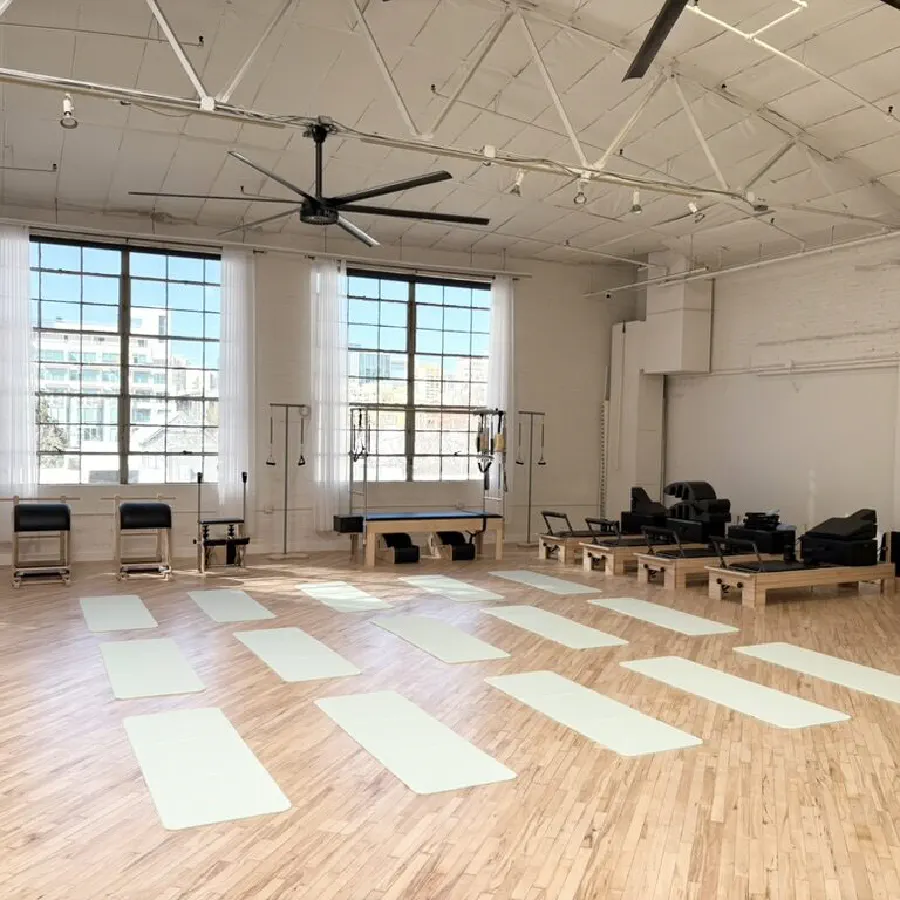
The class that used to wreck you now feels like a warm-up, and you’re wondering what you did wrong. Real talk: you didn’t do anything wrong.
Month eight feels like month three
Around the middle of the first year, a lot of regulars notice the same thing. A class that once left you shaking now feels comfortable, and the progress you could feel every week has gone quiet.
That isn’t you losing it. It’s your body doing what bodies are built to do: adapting.
This post is for you if you love your group classes, show up every week, and don’t want to overhaul your schedule to feel challenged again. Pick the class you’ve been coasting through. What I’d look for is which part of it you could do without thinking. That’s the part to hold onto for later.
Your body learned the class
Here’s the thing: your nervous system is good at filing things away. Same exercises, same sequences, same tempo, and it learns them.
In my experience, most people adapt to a group programming style within about 90 days. That’s what I see in my own sessions, not a research result. The work that built you up to month three is now maintenance.
Maintenance has real value. It keeps your consistency, your strength, and your habit. It just doesn’t ask your body anything new.
Next class, I’d pick one exercise you know cold and change one thing: slow the tempo down or add a breath to each rep. If it suddenly feels hard again, you’ve found where you adapted.
Group programs for the median
A great group instructor designs for the room: the average body, the average level, the average day. That’s the job, and a good instructor does it well.
In your first months, you were the average. By the middle of the first year, you’re probably not. The class hasn’t changed. You have.
This is the same point we make in what a group class can’t do for your body: a group class is built for the room, so it can’t be built around you.
I’d write down two or three things you want your body to do that class doesn’t ask for right now. That list is your brief for what comes next.
A private asks a new question
A private looks at what your body has stopped being challenged by and gives it a new question. That might be a different load, a different angle, a different breath, or a different tempo.
Sometimes the right question is enough to get you moving forward again. That’s a hope, not a promise, because every body is different.
If you’re curious what the hour looks like, we walk through it in what actually happens in your first private session.
Bring your list from the last section. It gives your instructor somewhere to start.
One private a month, layered on top
Not a switch, and not weekly. One private every 30 days, on top of your usual group schedule.
The private is where you change. Then your group classes start asking new questions of you again, because you’re not the same person who walked in last month.
In my experience, clients who add a monthly private tell me their Sunday class feels new again. They’re also the regulars who stick with Pilates instead of quietly drifting away.
Keep your classes, add one private, and let the two do different jobs.
How to add it
Look at your calendar for the month ahead and pick the week where a private fits best around your regular classes.
Your plateau is a sign that you outgrew the average, and that’s a good problem to have.
Find your instructor
You keep the group classes you love, and one private a month gives them something new to build on. Inspired Studios in downtown San Diego rents suites to independent instructors, and your private is with one of them. DM us “MONTHLY” and we’ll match you with the right instructor.